
What do you know about the 1935 penny value? Can this pre-war Wheat cent be worth more than expected?
Well, if you are not a beginner in numismatics, you can guess that the year is not rare. Millions were struck at three mints. Most examples remain affordable in circulated grades.
Yet some 1935 cents sell for strong premiums. But what actually makes this pre-war issue worth more — and when it does not?
Basic Overview of the 1935 Wheat Cent
The 1935 cent belongs to the Lincoln Wheat series struck from 1909 to 1958. The obverse shows Abraham Lincoln. The reverse displays two wheat ears framing the denomination.
There were no design changes in 1935. No special varieties tied to commemorative events. It is a standard circulation issue.
Technical specifications:
Feature | Specification |
Series | Lincoln Wheat (1909–1958) |
Composition | 95% copper, 5% tin, and zinc |
Weight | 3.11 g |
Diameter | 19.05 mm |
Edge | Plain |
Designer | Victor D. Brenner |
The metal composition matters. Pre-war cents contain nearly pure copper. That composition affects color, luster, and long-term preservation.
Mintage by Mint: Philadelphia, Denver, San Francisco
The 1935 cent was struck at three facilities.
Mint | Mintage (Approx.) |
1935 (Philadelphia) | 245,388,000 |
1935-D | 47,000,000+ |
1935-S | 38,700,000+ |
Philadelphia produced the highest number. Denver and San Francisco minted fewer coins.
Lower mintage does not automatically mean rarity. In circulated grades, all three remain common. The difference appears in higher Mint State levels.
Philadelphia coins are easiest to find in all grades. The Denver and San Francisco issues become scarcer in strong red condition.
Condition: The Real Driver of Price
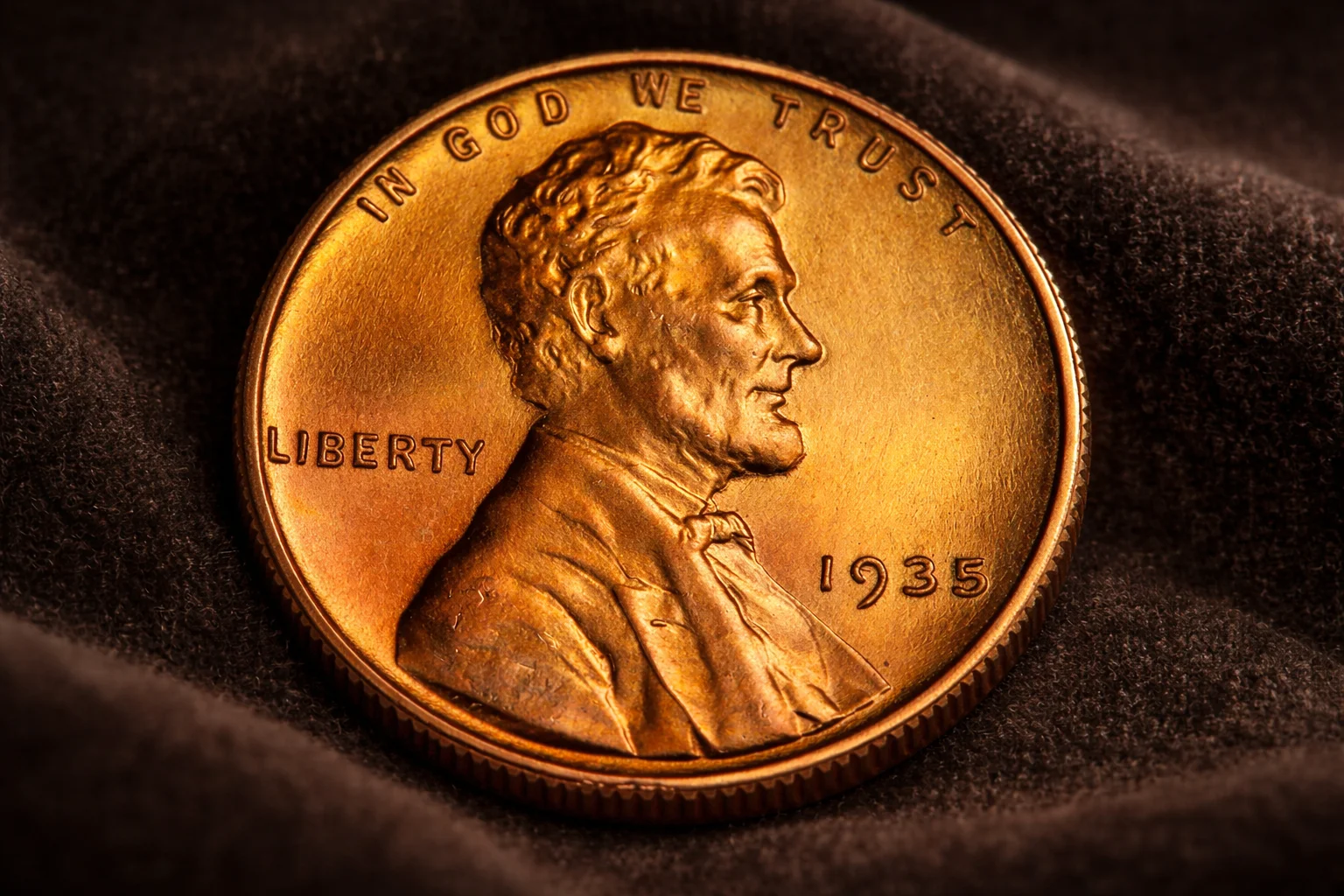
Circulated 1935 cents are widely available. In Good to Fine condition, they trade slightly above face value. Many show heavy wear from decades in commerce.
As grade improves, separation begins.
In Extremely Fine and About Uncirculated condition, the detail is clearer. Wheat lines show more definition. Lincoln’s cheek retains shape. Premiums rise but remain moderate.
The market changes in Mint State.
Approximate values are:
Grade | 1935 (P) | 1935-D | 1935-S |
Good–VF | Modest | Slightly higher | Slightly higher |
AU | Moderate | Moderate+ | Moderate+ |
MS63 BN | Noticeable jump | Stronger | Stronger |
MS65 RD | Significant | Strong | Strong |
MS66+ RD | Rare, auction-based | Rare | Very rare |
In MS63 Brown, prices move into collectible territory. In MS65 Red, premiums become serious. In MS66 Red, coins often trade at auction levels.
High-grade copper from the mid-1930s is not common. Many coins circulated. Others developed oxidation.
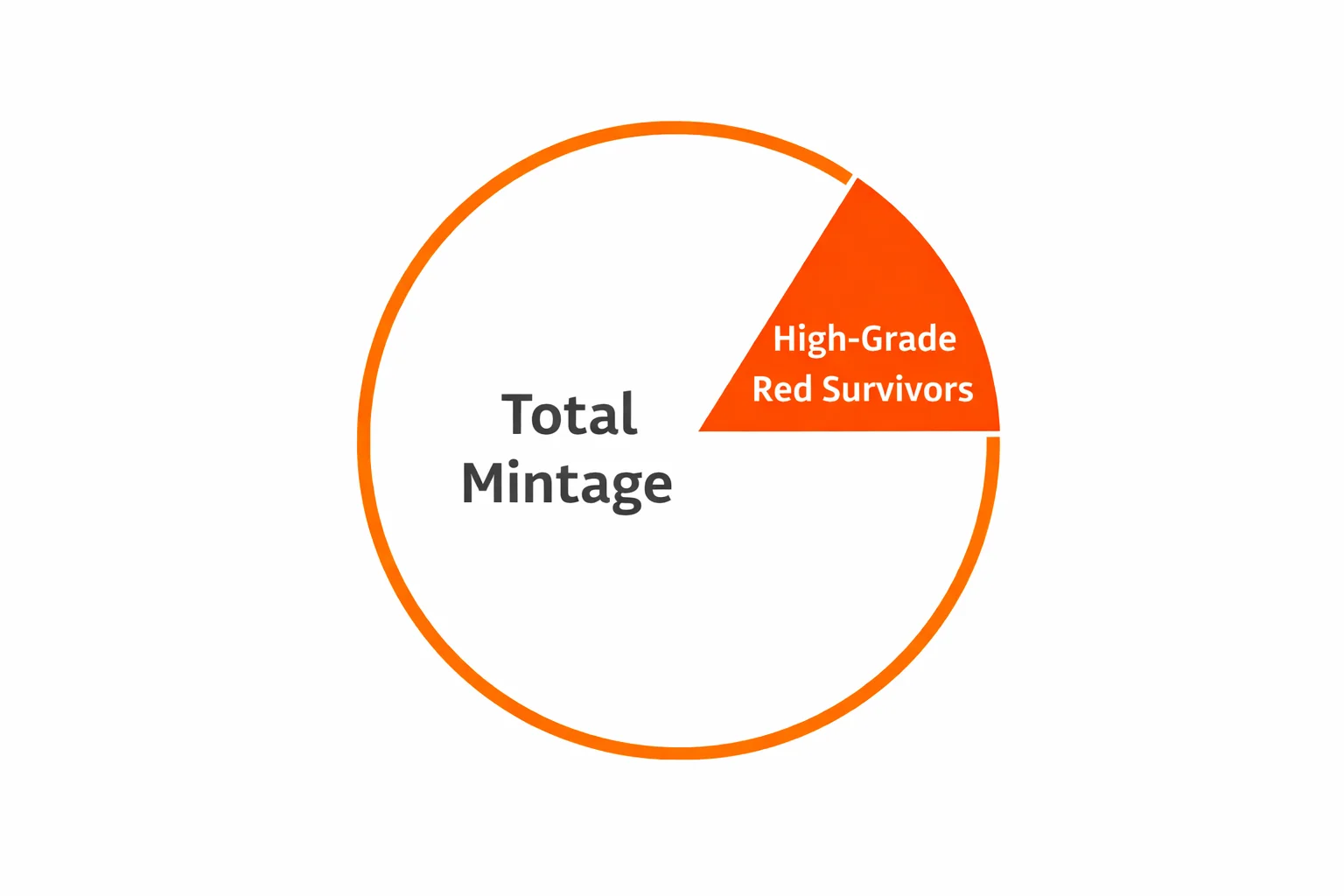
The year is not scarce, but high-grade survivors are.
Color Designation: Brown, Red-Brown, Red
Color plays a major role in 1935 penny value.
Copper reacts with air. Over time, red luster fades into brown tones. The grading system recognizes three categories:
Brown (BN)
Red-Brown (RB)
Red (RD)
Brown coins show full oxidation. They are stable but less visually bright.
Red-Brown coins retain partial original mint color.
Red coins preserve most of their original surface color. These are the most desirable.
In Mint State, the price gap between Brown and Red can be large. An MS65 Brown may sell for a fraction of an MS65 Red example.
Original red surfaces from the 1930s are difficult to preserve. Storage conditions determine survival. Coins stored in humid or reactive environments lose red tone quickly.
Collectors pay for originality. Artificially bright coins often show cleaning or recoloring. Those pieces lose market respect.
Color can multiply price without changing the date.
Strike Quality and Detail
Strike quality varies in the mid-1930s.
Some 1935 cents show softer details. Others display strong impressions.
Key areas to inspect:
Lincoln’s cheek and jaw
Hair above the ear
Wheat line separation
Letter sharpness in LIBERTY and IN GOD WE TRUST
Weak strike reduces eye appeal. Strong strike enhances detail and adds market confidence.
Strike quality affects grade at higher levels. An MS66 coin with sharp detail stands above one with flat areas.
Original luster also matters. The cartwheel effect under light indicates undisturbed surfaces.
Eye Appeal and Surface Preservation
Two coins can share the same technical grade yet differ in price.
Eye appeal includes:
Even color
Clean fields
Minimal contact marks
No cleaning lines
Cleaned coins show hairline scratches. Artificial brightness often signals chemical treatment. Collectors prefer coins with natural tone and untouched surfaces, as the market rewards originality.
Survival Rate in High Grades
Large mintage numbers suggest abundance. That assumption fails at the top.
Many 1935 cents entered circulation immediately. Others were stored in rolls, but later developed toning.
True MS66 Red examples are limited. Population reports show scarcity at extreme grades.
The combination of:
Strong strike
Full red color
Minimal marks
is difficult to find.
Scarcity in top condition supports price stability.
Comparing 1935 with Neighboring Years
The 1934 and 1936 cents share similar profiles. None are key dates. All have substantial mintage.
However, small differences in survival rates affect top-grade pricing.
In some cases, 1935 Red coins trade similarly to 1936 examples. Denver and San Francisco issues often command stronger premiums in high grade.
The mid-1930s period represents transitional pre-war copper production. It lacks dramatic rarity but offers steady collector interest.
Practical Evaluation Checklist
When examining a 1935 cent, follow a simple routine.
Check weight. It should read 3.11 grams.
Confirm mint mark location below the date.
Inspect color classification.
Examine wheat lines for sharpness.
Rotate under soft light to observe luster.
Look for cleaning marks.
Each factor contributes to the final price. Do not rely on age alone.
Market Trends and Stability
The 1935 cent maintains steady demand. It fits into date-and-mint sets. It appeals to collectors building complete Wheat series collections.
Prices for circulated coins remain stable. They move gradually with copper sentiment and collector interest.
High-grade Red coins show the strongest performance. Registry competition drives premiums in MS66 and above.
The market is not speculative. It is measured and steady.
Is the 1935 Penny Undervalued?
Some collectors consider pre-war copper underpriced. Others view it as stable but slow.
The 1935 cent sits between common and collectible. It is accessible in circulated grades. It becomes competitive in high red conditions.
It is not a hidden rarity, not a key date. Its strength lies in quality: in Mint State Brown, it gains moderate interest; in MS65 Red, it becomes a serious collector coin; in MS66 Red, it turns into a premium piece.
All these nuances you should know to know the value of a coin. Is there a way to check it more quickly? Sure, try the Coin ID Scanner app to quickly receive minting details and even the current market value. Download and explore coins more easily.